MSC CoSim Download (Latest 2026) - FileCR
Free download MSC CoSim 2025.1 Latest full version - Powerful tool for advanced multi-solver simulation.
Free download MSC CoSim 2025.1 Latest full version - Powerful tool for advanced multi-solver simulation.
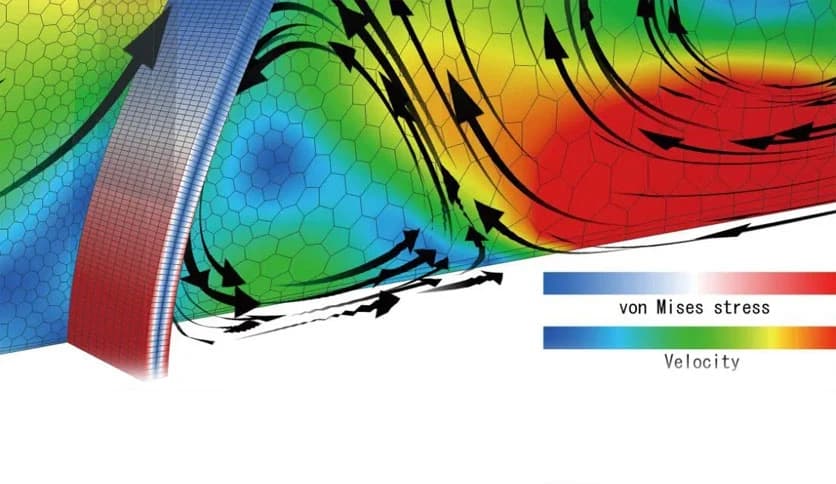
Free Download MSC CoSim for Windows PC. It is a powerful co-simulation platform that integrates multiple engineering solvers into a single, unified environment.
It is designed to integrate diverse simulation tools, enabling engineers to solve complex, real-world problems without switching between disconnected systems. Think of it as a conductor leading an orchestra. Each solver plays its own instrument, but the software makes sure they all stay in harmony.
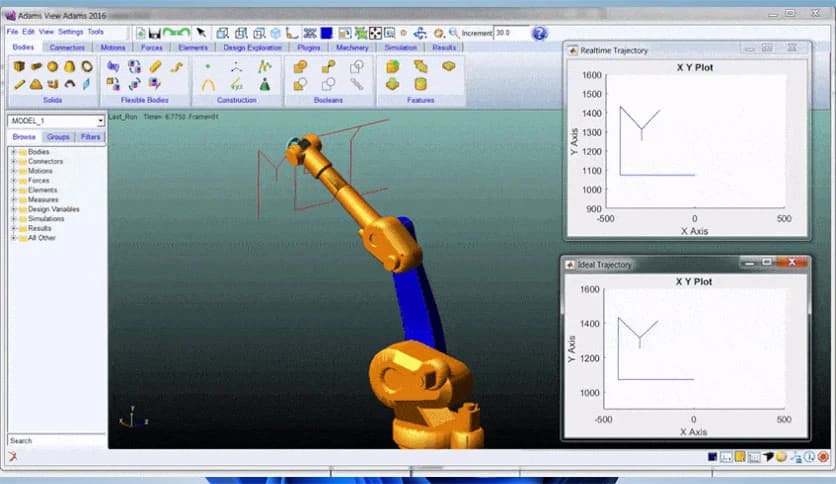
It manages interactions among well-known systems such as Adams for multibody dynamics, Marc for finite element analysis, and scFLOW for computational fluid dynamics. Instead of running these tools separately and manually sharing data, the platform organizes everything into a single, streamlined workflow.
This unified setup enables engineers to study how structures, fluids, motion, and thermal effects interact in real time. The result is a more accurate analysis and better design decisions.
Modern engineering problems are rarely simple. A moving vehicle interacts with air, water, heat, and mechanical stress simultaneously. The tool enables different solvers to communicate during simulation, allowing data to flow back and forth automatically.
For example, motion calculated in a dynamics solver can directly influence airflow in a CFD system. At the same time, fluid pressure can affect structural deformation in an FEA model. This two-way interaction makes results far more realistic.
Instead of guessing how systems influence each other, engineers can now see it happening step by step.
One of the software's strongest features is its ability to integrate major analysis systems seamlessly. It coordinates:
By linking these systems, it creates a shared simulation environment where motion, stress, heat, sound, and fluid flow can all be analyzed together. This reduces manual data transfers and lowers the risk of errors.
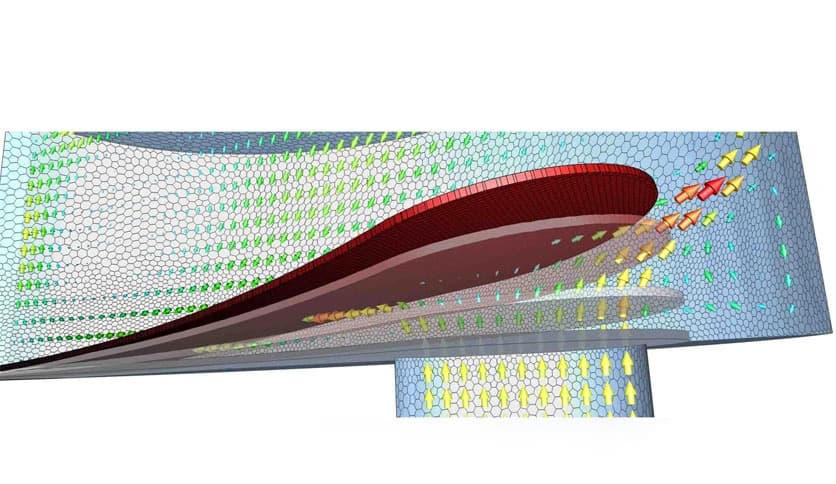
The platform excels in aerodynamic analysis. Imagine studying a wing while its flap extends. Airflow changes instantly as the flap moves. With co-simulation, Adams calculates motion while scFLOW evaluates airflow simultaneously.
The same approach applies to propeller-fluid interaction. When a propeller rotates in water, factors such as free-surface effects and cavitation must be considered. By combining structural solvers with CFD tools, engineers can evaluate both mechanical and fluid behavior together.
This approach gives a deeper understanding of how designs perform under real operating conditions.
When a vehicle drives through a water obstacle, its suspension must also handle forces from the water. Water resistance and fluid impact also affect movement. The software allows Adams to calculate suspension dynamics while scFLOW models fluid interaction.
This combined analysis helps engineers predict performance, durability, and comfort. Instead of analyzing each factor separately, they can examine the full picture within a single environment.
It is like watching the entire movie instead of seeing random snapshots.
Fluid-structure interaction is critical in many industries. Consider a moving tank partially filled with liquid. As it accelerates or turns, the fluid inside moves and hits the walls. This sloshing effect creates dynamic pressure on the structure.
The tool enables motion solvers and CFD systems to work together to accurately simulate these conditions. Engineers can study how the fluid movement affects structural integrity and stability.
This is essential for fuel tanks, marine vessels, aerospace systems, and industrial storage units.
Noise control is another important area. In vehicle exhaust systems and mufflers, airflow generates sound waves. By linking acoustic analysis systems to CFD tools, the software enables evaluation of aeroacoustic properties under realistic flow conditions.
It also supports shock wave modeling in supersonic flow. When a vibrating plate interacts with high-speed airflow, complex pressure waves develop. Coordinated simulation between structural and fluid solvers provides accurate predictions of stress and vibration behavior.
This capability is vital in aerospace and high-speed engineering applications.
Thermal stress plays a huge role in electronics. Soldered joints in electronic components expand and contract due to temperature changes. When heat flow interacts with mechanical stress, the risk of failure increases.
By combining scSTREAM for thermal-fluid simulation with structural solvers for stress estimation, the platform enables thermomechanical stress analysis within a single workflow.
This integrated approach improves reliability predictions and supports safer, longer-lasting designs.
Working with separate tools can feel like juggling too many balls at once. The software removes that complexity by organizing the entire interaction process.
Key advantages include:
It saves time, reduces confusion, and improves confidence in results.
MSC CoSim brings different simulation worlds together into a single, smart, organized environment. It enables engineers to analyze motion, fluid flow, stress, heat, and acoustics simultaneously, producing results that reflect real-world conditions. By connecting leading solvers and automatically managing their interactions, it simplifies complex studies and supports smarter engineering decisions.
Leave a comment
Your email address will not be published. Required fields are marked *